
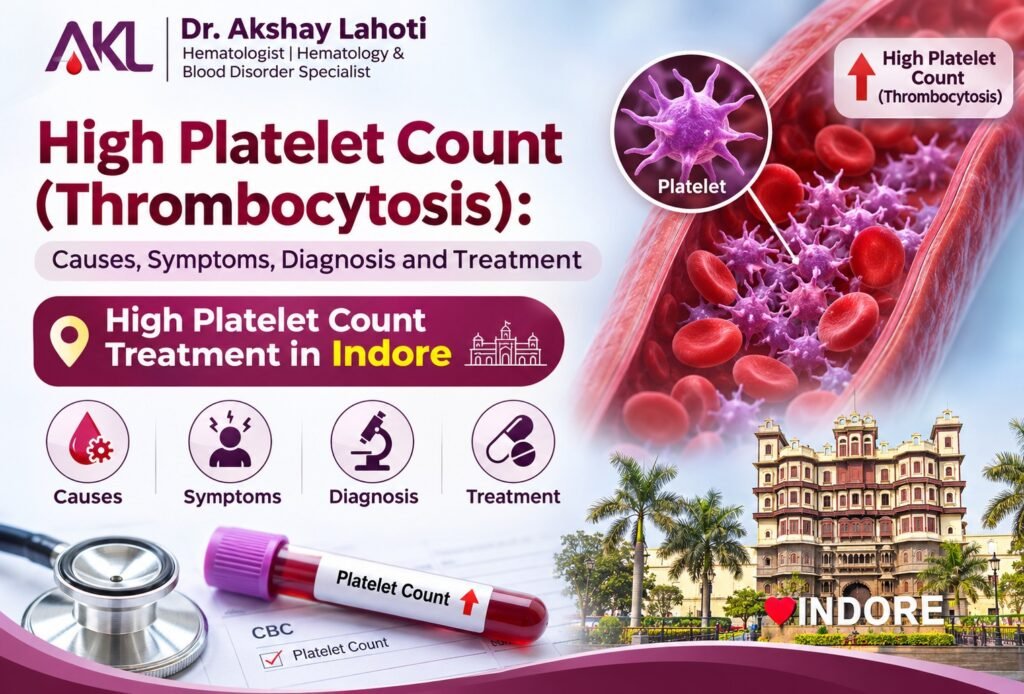
A high platelet count, medically known as thrombocytosis, is a blood condition in which the number of platelets is higher than the normal range. Platelets are essential for blood clotting, but persistently elevated levels may sometimes increase the risk of complications. High Platelet Count Treatment in Indore begins with identifying the underlying cause and understanding the patient’s individual health condition. Dr Akshay Lahoti, haematologist in Indore, provides evaluation and guidance for patients with abnormal platelet reports at Medicare Hospital and Research Centre, Old Palasia, near Ravindra Nagar.
What Is Thrombocytosis?
Platelets are small blood cells produced in the bone marrow. They circulate through the bloodstream and help stop bleeding by forming a clot when a blood vessel is injured. A normal platelet count is generally between 150,000 and 450,000 platelets per microlitre of blood, although laboratory reference ranges may differ slightly.
When the platelet count remains above approximately 450,000 per microlitre, doctors may consider thrombocytosis. A high result does not automatically mean that a person has a serious blood disorder. Platelet levels can temporarily increase during infection, inflammation, recovery from surgery or other medical conditions.
In some individuals, however, the platelet count remains elevated for a longer period. This may require further evaluation to determine whether the condition is reactive or related to abnormal platelet production in the bone marrow.
Dr Akshay Lahoti evaluates platelet levels for High Platelet Count Treatment in Indore along with the patient’s medical history, symptoms and other blood test results before recommending further investigations.
Causes of Elevated Platelets
The Causes of Elevated Platelets can be divided into two major categories: reactive thrombocytosis and primary thrombocytosis. Understanding the difference is important because the treatment approach varies according to the underlying condition.
-
Reactive Thrombocytosis
Reactive thrombocytosis occurs when the body produces additional platelets in response to another medical condition. It is the more common type of thrombocytosis.
Some common causes include:
- Bacterial or viral infections
- Iron deficiency anaemia
- Chronic inflammatory conditions
- Recent surgery or physical injury
- Significant blood loss
- Recovery after an illness
- Removal of the spleen
- Certain cancers
For example, platelet levels may increase temporarily when the body is recovering from an infection. Similarly, people with iron deficiency may develop elevated platelet counts even when their main symptoms are related to anaemia.
In reactive thrombocytosis, the bone marrow is usually responding to a signal from another condition rather than producing platelets because of a primary bone marrow disorder.
Treatment generally focuses on managing the underlying cause. Once the infection, inflammation or iron deficiency improves, platelet levels may gradually return towards the normal range.
-
Essential Thrombocythemia
Essential Thrombocythemia is a chronic bone marrow disorder in which the body produces excessive platelets. It belongs to a group of conditions called myeloproliferative neoplasms.
In this condition, certain changes in bone marrow cells can lead to increased platelet production. Mutations involving JAK2, CALR or MPL genes may be identified in some patients.
Essential thrombocythemia can occur in adults of different age groups. Some people remain without symptoms for many years and discover the condition during routine blood testing.
Others may develop circulation-related symptoms or complications such as blood clots or bleeding. The risk varies according to age, previous clotting history, genetic findings and other health factors.
Dr Akshay Lahoti may recommend additional blood investigations and, when indicated, a bone marrow examination to distinguish essential thrombocythemia from reactive causes.
High Platelet Count Symptoms
Many people with thrombocytosis do not experience noticeable symptoms. The condition is often detected during a routine complete blood count performed for another reason.
When symptoms occur, they may be related to changes in blood circulation or platelet function.
Common high platelet count symptoms may include:
- Persistent or recurring headaches
- Dizziness or light-headedness
- Unusual tiredness or weakness
- Temporary changes in vision
- Tingling or burning sensations in the hands and feet
- Redness or discomfort in the fingers and toes
- Easy bruising
- Nosebleeds or other unusual bleeding
Some patients may experience symptoms associated with blood clots. These can include swelling or pain in one leg, sudden chest discomfort or neurological symptoms.
It is important to remember that these symptoms can also occur in many other medical conditions. A person should not assume that headaches or fatigue are caused by high platelets without appropriate evaluation.
High Platelet Count in Adults: Who May Be at Risk?
High platelet count in adults may develop due to several underlying health conditions. The likelihood of reactive thrombocytosis can increase during infections, inflammatory illnesses, recovery from surgery or periods of significant blood loss.
Adults with iron deficiency anaemia may also show an elevated platelet count. Iron deficiency can occur due to inadequate dietary intake, chronic blood loss or certain gastrointestinal conditions.
In older adults, persistent thrombocytosis may require careful evaluation because the possibility of an underlying bone marrow disorder or other medical condition may need to be considered.
A family history of certain blood disorders may also be relevant in selected cases.
Dr Akshay Lahoti considers these factors when reviewing a patient’s blood report. The platelet count alone is not sufficient to determine the diagnosis or treatment plan.
High Platelet Count Diagnosis
Accurate diagnosis is essential because different conditions can produce similar platelet counts. High Platelet Count Treatment in Indore should be based on the cause, medical history and investigation results rather than the platelet number alone.
Complete Blood Count
A complete blood count, commonly called CBC, measures platelets along with red blood cells and white blood cells.
The CBC helps determine whether the platelet count is elevated and whether other blood cell levels are also abnormal. These findings can provide important clues about the underlying condition.
Platelet Count Blood Test
A Platelet Count Blood Test measures the number of platelets in a specific volume of blood. If the result is unexpectedly high, the doctor may recommend repeating the test to confirm whether the elevation persists.
Temporary platelet changes may occur during illness or recovery. Repeat testing helps distinguish a temporary increase from persistent thrombocytosis.
Peripheral Blood Smear
A peripheral blood smear involves examining a blood sample under a microscope. It allows the laboratory to assess the appearance of platelets and other blood cells.
The test may help identify unusual platelet shapes, changes in red blood cells or other abnormalities that require further investigation.
Iron Studies
Iron studies, including ferritin and other iron measurements, may be recommended when iron deficiency is suspected.
Since iron deficiency is a common cause of reactive thrombocytosis, identifying and correcting it can be an important part of management.
Inflammatory Markers
Tests such as C-reactive protein may help identify inflammation or infection when clinically suspected.
These tests do not diagnose thrombocytosis directly, but they can provide useful information about possible reactive causes.
Genetic Testing
If platelet levels remain elevated without an identifiable cause, genetic testing may be considered.
Testing for JAK2, CALR and MPL mutations can help evaluate certain bone marrow disorders, including essential thrombocythemia.
Bone Marrow Examination
A bone marrow biopsy may be recommended when a primary bone marrow disorder is suspected.
The examination helps assess the number, appearance and development of blood-forming cells. It may be useful in distinguishing essential thrombocythemia from other myeloproliferative conditions.
Not every patient with an elevated platelet count requires a bone marrow biopsy. The decision depends on the clinical findings and results of other investigations.
High Platelet Count Treatment in Indore
Treatment depends on the cause of thrombocytosis, the platelet count, symptoms and the patient’s risk of complications.
Not every patient requires medicines to reduce platelets. In many cases, the most appropriate approach is to treat the underlying condition and monitor platelet levels over time.
Treating the Underlying Cause
In reactive thrombocytosis, treatment focuses on the condition responsible for the elevated platelet count.
If iron deficiency is identified, appropriate iron replacement may be recommended after medical evaluation. If an infection or inflammatory condition is responsible, treatment is directed towards that condition.
As the underlying problem improves, platelet levels may gradually return towards the normal range.
Monitoring Platelet Levels
Some patients may only require regular blood tests and clinical follow-up.
Monitoring helps determine whether platelet levels are improving, remaining stable or increasing further. The frequency of testing depends on the suspected cause and the patient’s overall condition.
Dr Akshay Lahoti may recommend repeat CBC testing and additional investigations when necessary.
Medicines for Essential Thrombocythemia
Patients diagnosed with essential thrombocythemia may require treatment to reduce the risk of blood clots.
Depending on individual risk, a haematologist may consider low-dose aspirin or medicines that reduce platelet production.
Medicines such as hydroxyurea, anagrelide or interferon may be used in selected patients. The choice depends on factors such as age, clotting history, symptoms and other medical conditions.
These medicines require medical supervision. Aspirin is not suitable for everyone, and taking it without medical advice may increase the risk of bleeding.
Emergency Management
In rare situations involving severe complications, a procedure called plateletpheresis may be used to temporarily remove platelets from the bloodstream.
This procedure is generally reserved for specific urgent circumstances and is not a routine treatment for every patient with thrombocytosis.
Can High Platelet Count Cause Complications?
The risk of complications depends on the underlying diagnosis and individual health factors.
Some patients with reactive thrombocytosis may have a low risk of platelet-related complications, while certain bone marrow disorders can increase the risk of blood clots.
Possible complications include:
- Deep vein thrombosis
- Pulmonary embolism
- Stroke
- Heart-related blood clots
- Abnormal bleeding
Very high platelet levels may sometimes be associated with bleeding problems rather than only clotting. This is one reason treatment should be guided by a haematologist.
Sudden chest pain, severe breathlessness, difficulty speaking, facial drooping or weakness on one side of the body requires emergency medical attention.
Lifestyle and Follow-Up
Lifestyle changes cannot directly cure every cause of thrombocytosis, but maintaining general health can support overall wellbeing.
Patients may benefit from:
- Eating a balanced diet with adequate iron and nutrients
- Staying physically active according to medical advice
- Avoiding smoking
- Maintaining adequate hydration
- Attending recommended follow-up appointments
- Taking prescribed medicines correctly
Iron supplements should not be started without confirmation of iron deficiency. Similarly, aspirin or platelet-lowering medicines should not be taken without medical guidance.
Regular follow-up is particularly important for patients diagnosed with essential thrombocythemia or another chronic blood disorder.
High Platelet Count Treatment in Indore: Nearby Areas
Patients looking for a High Platelet Count Specialist in Manorama Ganj, Old Palasia, Ravindra Nagar and nearby localities can consult Dr Akshay Lahoti at Medicare Hospital and Research Centre.
Frequently Asked Questions
1. What is considered a high platelet count?
A platelet count above approximately 450,000 per microlitre is commonly considered elevated. However, the result should be interpreted according to the laboratory reference range, medical history and other blood test findings. Dr Akshay Lahoti may recommend repeat testing to determine whether the elevation is temporary or persistent.
2. What are the common causes of elevated platelets?
Common causes include infection, inflammation, iron deficiency, recent surgery, blood loss and certain bone marrow disorders. Reactive causes are more common than primary bone marrow conditions. Identifying the cause is important because treatment may involve correcting an underlying condition rather than directly lowering platelet levels.
3. What are the symptoms of High Platelet Count Treatment in Indore?
Many people have no symptoms. Others may experience headaches, dizziness, weakness, vision changes, unusual bruising or bleeding. Some patients may develop symptoms related to blood clots. A blood test is required to confirm an elevated platelet count.
4. How is thrombocytosis diagnosed?
Diagnosis usually begins with a CBC and repeat platelet count. Depending on the findings, a doctor may recommend iron studies, inflammatory markers, a peripheral blood smear, genetic testing or bone marrow examination. These investigations help distinguish reactive thrombocytosis from primary bone marrow disorders.
5. Is reactive thrombocytosis dangerous?
Reactive thrombocytosis often improves when the underlying cause is treated. However, the seriousness depends on the condition responsible for the elevated platelet count and the patient’s overall health. Persistent or unexplained thrombocytosis should be evaluated by a medical professional.
6. What is Essential Thrombocythemia?
Essential Thrombocythemia is a chronic bone marrow disorder that causes excessive platelet production. It may require regular monitoring and, in selected patients, medicines to reduce the risk of blood clots. Treatment depends on individual risk factors, symptoms and clinical findings.
7. When should I seek High Platelet Count Treatment in Indore?
Patients with persistently elevated platelet levels, unexplained abnormal blood reports or symptoms such as headaches, dizziness or unusual bleeding should seek medical evaluation. Dr Akshay Lahoti can assess the reports and recommend suitable investigations to identify the cause.
8. Can iron deficiency cause a high platelet count?
Yes. Iron deficiency is a recognised cause of reactive thrombocytosis. Iron studies may help identify this condition. If iron deficiency is confirmed, appropriate treatment may help improve the platelet count. Iron supplements should be taken only after medical advice.
9. Where can I consult a haematologist in Old Palasia, Indore?
Dr Akshay Lahoti consults at Medicare Hospital and Research Centre, 5th Floor, Room No. 519, Old Palasia, Indore. Patients from Ravindra Nagar, Manorama Ganj, New Palasia and near Palasia Square can seek consultation for platelet-related concerns and abnormal blood reports.
10. Does every patient need medicine to reduce platelets?
No. Some patients require only monitoring or treatment of an underlying condition. Others with essential thrombocythemia may need medication depending on their risk of blood clots or bleeding. Treatment decisions should always be made by a qualified haematologist after proper evaluation.
Conclusion
A high platelet count can result from temporary medical conditions or an underlying blood disorder. Understanding the cause is the most important step towards appropriate care.
Dr Akshay Lahoti, haematologist in Indore, provides evaluation and guidance for patients with elevated platelet counts at Medicare Hospital and Research Centre, Old Palasia. Patients from Ravindra Nagar, Manorama Ganj, New Palasia and nearby areas can seek medical advice for persistent abnormal platelet reports.
High Platelet Count Treatment in Indore should always be guided by proper diagnosis, individual risk assessment and regular follow-up. Early evaluation can help identify the cause and support appropriate medical management.